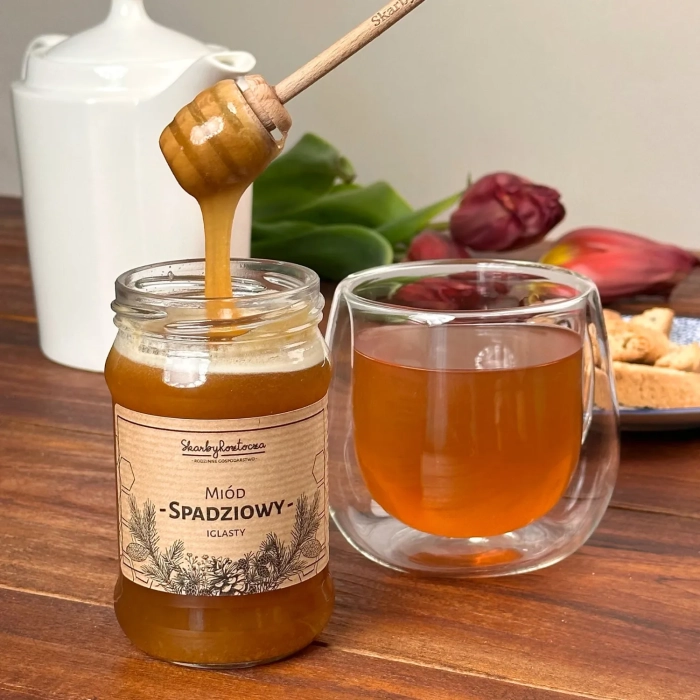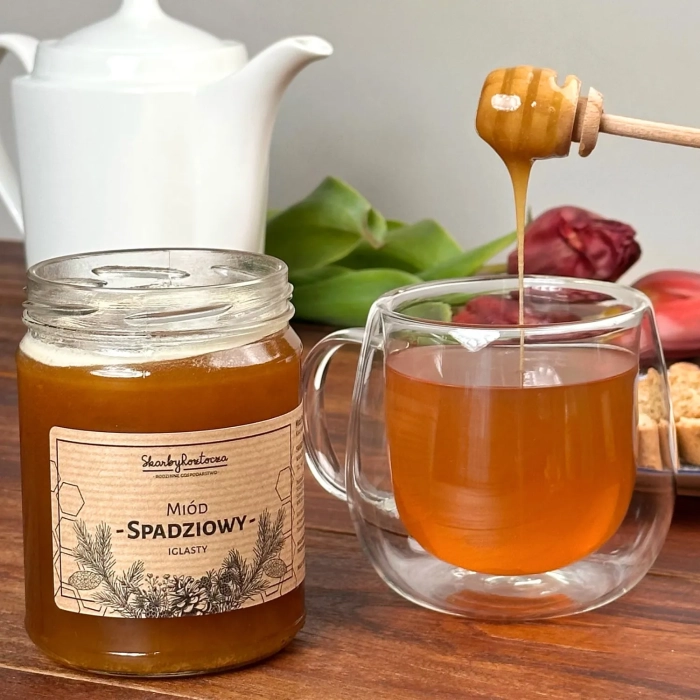

Buckwheat Honey - a treasure of nature full of health and flavour.
Buckwheat honey is one of the most characteristic and valued types of honey, known both for its unique taste and numerous health benefits. Derived from the nectar of buckwheat flowers, this dark honey holds a wealth of nutrients that make it a true treasure of nature.
Want to discover the properties of buckwheat honey? We invite you to read this post!
Table of contents:
1. Health properties of buckwheat honey.
2. Nutrients of buckwheat honey.
4. How is buckwheat honey obtained?
1. Health properties of buckwheat honey.
Buckwheat honey is valued for its unique health properties. Thanks to its high content of antioxidants, such as flavonoids and phenolic acid, it helps in the fight against free radicals, which can contribute to the aging processes of the body and the development of chronic diseases. Regular consumption of buckwheat honey can support the immune system, helping to prevent infections and inflammation.
This honey is also known for its antibacterial properties. The enzymes it contains produce hydrogen peroxide, which acts as a natural disinfectant, supporting the treatment of wounds and skin infections. Furthermore, buckwheat honey can be used as a natural remedy to support the treatment of colds and sore throats.
- Special benefits for the heart
Buckwheat honey is particularly beneficial for heart health. Due to its high iron and magnesium content, regular consumption of this honey can support the functioning of the circulatory system, improving blood quality and preventing anaemia. Iron is a key component of haemoglobin, the protein responsible for transporting oxygen in the blood, which is essential for the proper functioning of all cells in the body.
The magnesium contained in buckwheat honey helps in regulating heart rhythm and blood pressure, which can prevent cardiovascular diseases. Flavonoids present in buckwheat honey also have a positive effect on heart health, helping to reduce the risk of atherosclerosis by lowering bad cholesterol (LDL) levels and increasing good cholesterol (HDL) levels.
Consuming buckwheat honey can also support blood vessel health, making them more flexible and less susceptible to damage. All this makes buckwheat honey an excellent addition to the diet of people who care about the health of their heart and circulatory system.

2. Nutrients of buckwheat honey.
Buckwheat honey is not only tasty but also rich in nutrients. It contains a large amount of vitamins and minerals, including B vitamins, vitamin C, iron, magnesium, phosphorus, potassium, and zinc. These ingredients play a key role in many metabolic processes and support the health of the entire organism.
Due to its high iron content, buckwheat honey is particularly recommended for people suffering from anaemia. It helps in increasing haemoglobin levels and improving the overall condition of the blood. The magnesium and potassium contained in the honey support cardiovascular health, helping to regulate blood pressure and heart function.
In addition to a greater amount of mineral salts, buckwheat honey likely also contains a component of buckwheat plant juice that is highly valuable for human health, namely rutin. This substance normalises the impaired elasticity and permeability of blood vessels in the human body and prevents capillary breakage, which is of particular importance in hypertension. A lack of rutin or related compounds leads to disturbances in the normal tension and permeability of capillaries in the human body, resulting in exudates, erythema, petechiae, and haemorrhages.
3. Original taste.
Buckwheat honey stands out with its dark, almost black colour and intense, slightly spicy taste. Its aroma is distinctive, with floral notes and a delicate bitterness that makes it unique among other honeys. This unique flavour composition makes it an excellent addition to many dishes, both sweet and savoury.
In sweet cuisine, buckwheat honey adds depth of flavour to baked goods, desserts, and drinks. It can be used for cakes, biscuits, muffins, and bread, introducing an intense sweetness and rich aroma, giving them a characteristic, spicy aftertaste. Drizzling buckwheat honey over ice cream, waffles, pancakes, or fruit salads creates a sophisticated and tasty composition that will surprise any palate. Buckwheat honey is also an ideal sweetener for teas, coffees, smoothies, and hot chocolate, giving them a unique aroma and a delicate bitterness.
In savoury cuisine, buckwheat honey pairs perfectly with meat dishes, giving them depth of flavour and a unique aroma. It can be added to marinades and glazes for meats such as chicken, pork, beef, or lamb. Its intense taste highlights the natural qualities of the meat, giving it a unique character. Adding buckwheat honey to sauces, especially those with a spicy and piquant character, such as barbecue or curry sauces, introduces a unique accent that enriches the entire dish. Buckwheat honey also works great as an addition to roasted vegetables, salads, and cheese dishes. Its intense flavour contrasts with the delicacy of vegetables and cheeses, creating a harmonious whole.
Buckwheat honey encourages culinary experiments. It can be used as a substitute for sugar or other sweeteners in various recipes, which opens up wide possibilities for culinary creativity. Its unique taste perfectly complements both traditional and modern dishes, making them exceptional and unforgettable.
4. How is buckwheat honey obtained?
Buckwheat honey is made from the nectar of buckwheat flowers, a plant grown mainly in rural areas. Buckwheat blooms in summer, and bees collect nectar from its tiny white flowers, processing it into dark, aromatic honey. This process requires precision and care to preserve all the valuable health and nutritional properties of the honey.
Buckwheat is a plant that blooms during the summer period, usually from June to August. Its tiny, white or pink flowers attract bees, which collect the nectar needed for honey production. The nectar from buckwheat flowers is particularly rich in nutrients, which gives buckwheat honey its characteristic properties.
The entire process of obtaining buckwheat honey requires great precision and care to preserve all its valuable health and nutritional properties. As a result, buckwheat honey not only delights with its unique taste but also brings numerous health benefits. Beekeepers, by taking care of every stage of production, ensure that buckwheat honey reaches consumers in the best possible quality.
5. Summary.
Buckwheat honey is a true treasure of nature, combining a unique taste, a wealth of nutrients, and numerous health benefits. Its regular consumption can support the health of the immune, cardiovascular, and circulatory systems, as well as help in the fight against infections and inflammation. Thanks to its intense taste and aroma, buckwheat honey is an excellent addition to many dishes, enriching them with unique flavour qualities. We encourage you to include buckwheat honey in your diet and enjoy the full range of its beneficial properties.

Bibliography/ Sources:
Czekański M. Honey therapy, Wydawnictwo M, ISBN 978-83-60725-28-3, Kraków 2007