
Secrets of bee pollen colours - what determines its hue?
Bee pollen is not only a source of valuable nutrients, but also a real palette of colours that can be incredibly diverse.
So let's discover the secrets of pollen colours and what determines its shade. Welcome!
Table of contents:
1. Diversity of colours.
2. Factors affecting the colour.
3. Differences in taste and hardness in pollen
4. Why is it worth paying attention to the colour?
5. Palette of pollen colours
6. Summary
1. Diversity of colours.
Bee pollen can come in various colours, from almost white through light yellow and orange shades, through intense red, brown, green, and even blue, to almost black pollen loads. These differences in colour can be surprising, but they are the result of the diversity of plants from which bees collect pollen. Each plant species can provide a different colour of pollen, leading to a wide range of shades.
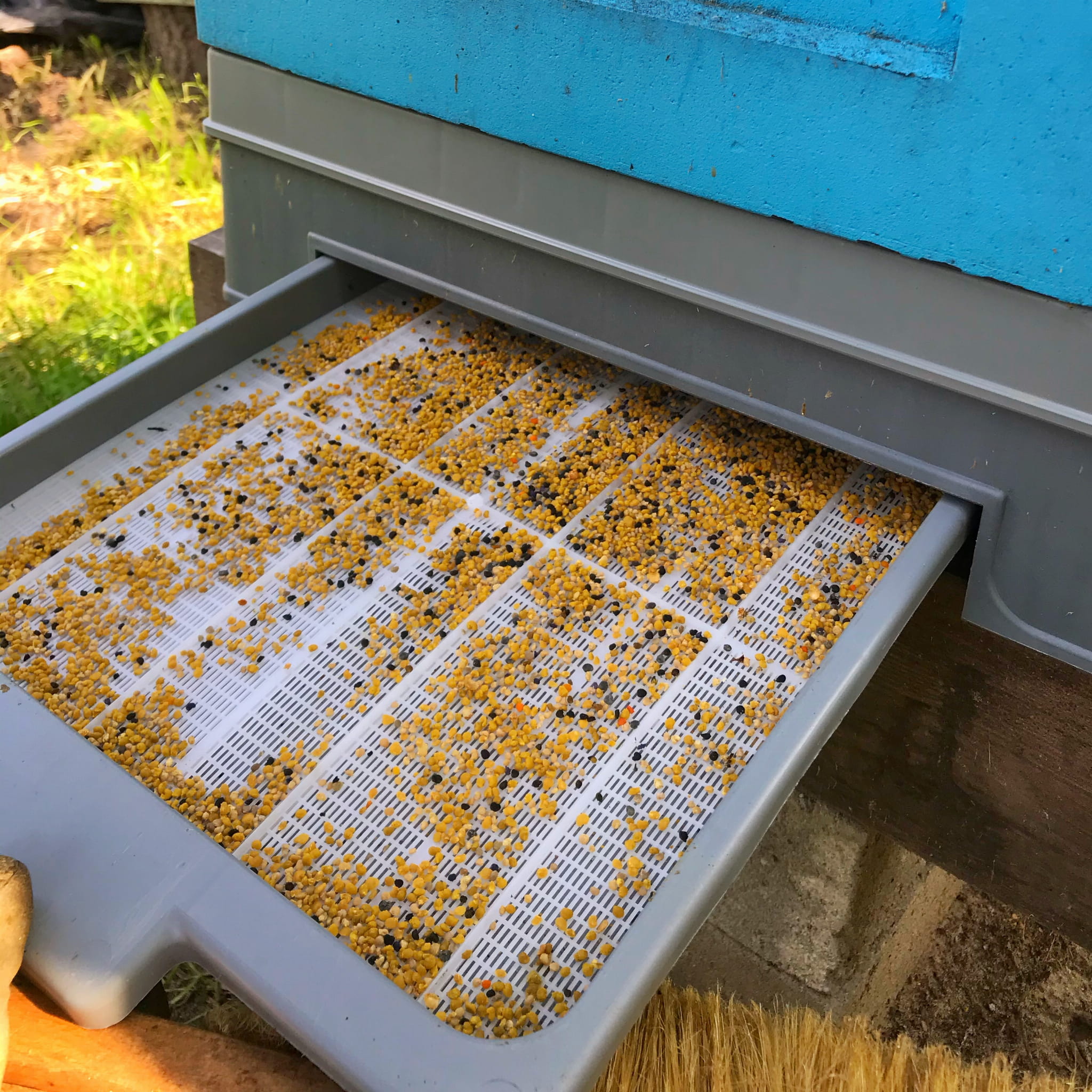
Photo illustrating the pollen trap bottoms in a beehive.
2. Factors affecting the colour.
- Plant type - the plant from which it was collected is responsible for the main colour of the pollen. Flowering plants can produce pollen of different shades, which makes the colour palette so diverse.
- Degree of pollen maturity - the colour of the pollen can change as the flowers mature. For example, in the early stages of flowering, plants may provide lighter pollen, which gradually changes to more intense shades as they mature.
- Climatic conditions - the environment in which the plants grow also affects the colour of the pollen. Factors such as sunlight, humidity, and soil composition can affect the chemical composition of plants and, consequently, the colour of the pollen.
- Seasonality - differences in pollen colours can also be related to the time of year. At different periods of the year, different plant species bloom, which leads to variability in the pollen colour palettes.
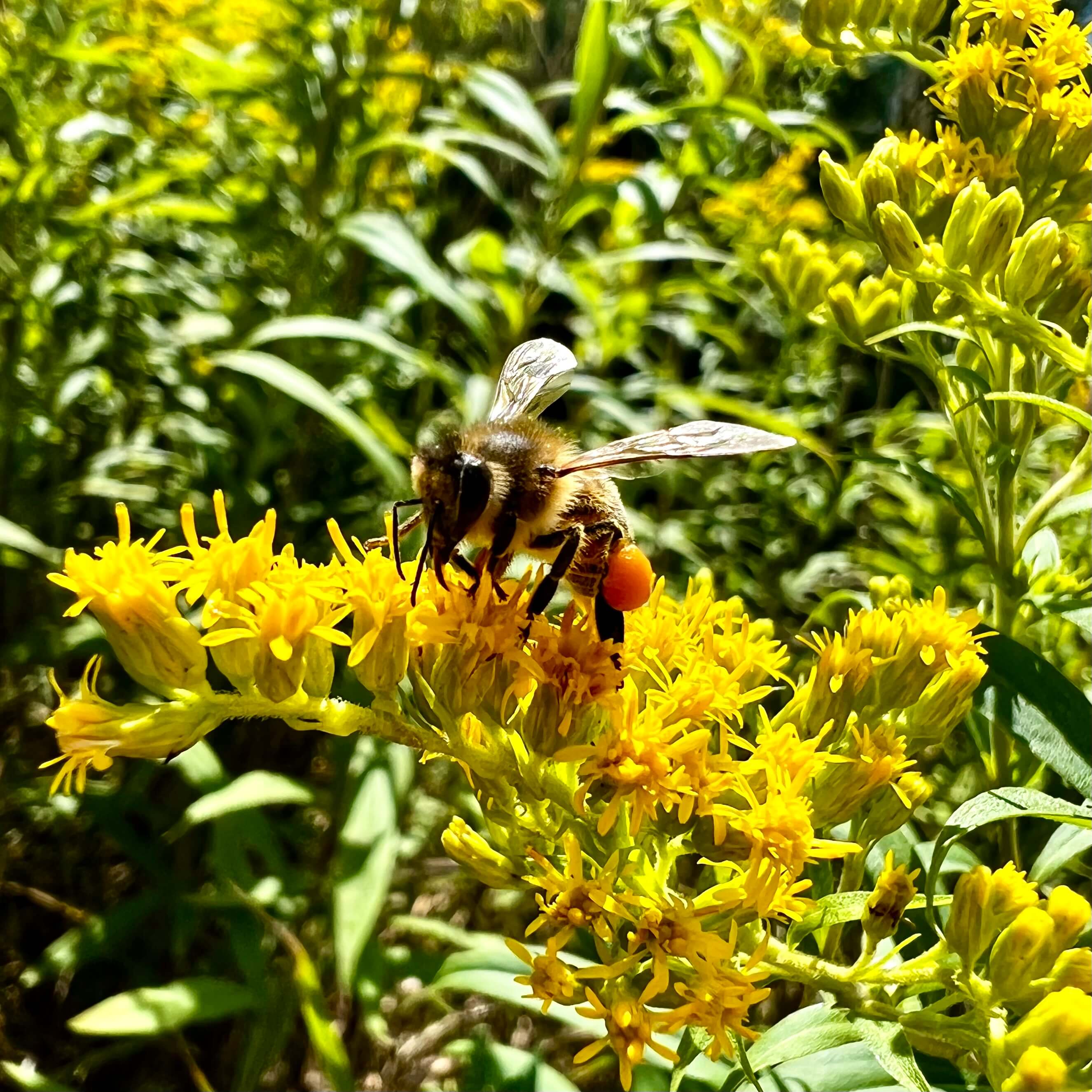
A bee collecting orange goldenrod pollen in autumn.
3. Differences in taste and hardness in pollen
Differences in pollen affect not only the colour, but also the taste and the degree of their solubility.
Spring pollen is much lighter, more delicate in taste and also softer, which affects its greater ability to dissolve. Despite these advantages, they are often not very biologically diverse and dominated by rapeseed nectar with the addition of dandelion or lighter elements from orchards blooming at that time.
Summer pollen already contains admixtures of other sources such as the characteristic blue-azure phacelia pollen, greyish raspberry, and greenish from blooming linden trees, and in autumn they are joined by sources with brown buckwheat pollen, orange from goldenrod, or dark-beige from heather. Pollen loads obtained in later months are often more bitter in taste, less sweet and harder to dissolve in water or require grinding. Such pollen, however, is much richer and biodiverse.
4. Why is it worth paying attention to the colour of the pollen?
The colour of pollen not only adds aesthetics but can also provide valuable information about its origin and composition. When choosing bee products, the diversity of pollen colours can indicate the variety of nutrients you will introduce into your diet.
Nutrient diversity indicator - the variety of pollen colours can indicate the variety of nutrients in the bee's diet. As bees collect pollen from different plant species, differences in colours can mean that the pollen contains a variety of vitamins, minerals, and other nutrients. By choosing bee products containing pollen of different colours, we can increase the chances of consuming a variety of nutrients.
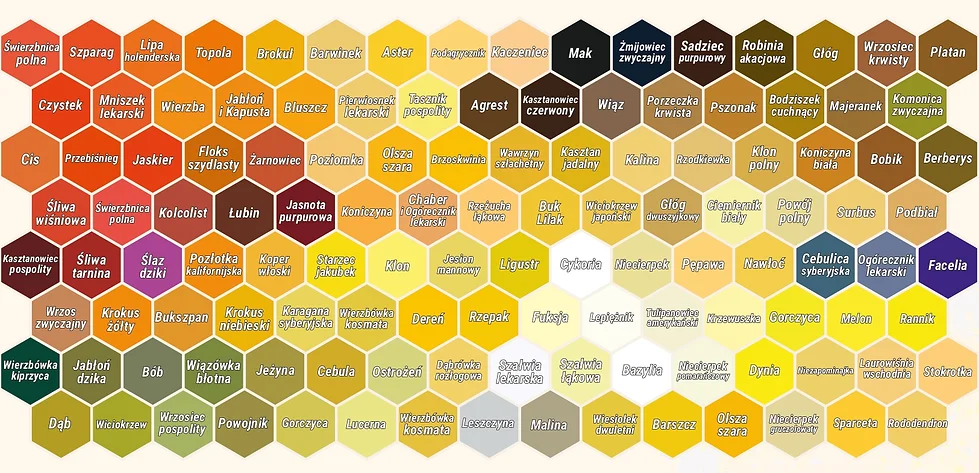

Source: Pasieka Wielkopolska, Pollen colours and the plants/trees they come from
The diversification of bee pollen colours is a fascinating phenomenon that results mainly from the variety of plants from which bees collect pollen. Each plant species can provide a different colour of pollen, leading to a wide range of shades, from light yellow to intense reds, blacks, browns, greens, and even blue colours. There are several factors affecting the colour of the pollen, such as the type of plant, the degree of pollen maturity, climatic conditions, and seasonality. It is worth paying attention to the colour of the pollen not only for aesthetic reasons but also because it can provide valuable information about its origin and composition. The variety of pollen colours can indicate the variety of nutrients in the bee's diet, which is important when choosing bee products.
By choosing products containing pollen of different colours, we can increase the chances of consuming a variety of nutrients, which will have a positive impact on our health and well-being.